
The world of work is facing profound change. Technological innovations, demographic shifts, changing values and new forms of work are presenting companies with enormous challenges - and at the same time opening up new opportunities. In the midst of these developments, people management plays a key role: it must not only keep pace with change, but also actively shape it.
The new study "Trend Barometer: People Management 2035" by the University of St.Gallen in cooperation with PwC sheds light on how HR functions, skills and corporate culture need to evolve in order to successfully shape the working world of tomorrow. It builds on the findings of the previous study "People Management 2030" and is based on the assessments of 256 HR experts from the DACH region.
The most important developments and trend lines up to 2035 are shown below:
The changing world of work: more than just digitalization
The study describes a twofold transformation: on the one hand, AI and people analytics are driving digitalization forward. On the other hand, expectations of work are changing - with a greater focus on self-determination, flexibility and meaning. HR must reposition itself in this field of tension: as a shaping, strategic function.
HR functions: Growing strategic importance
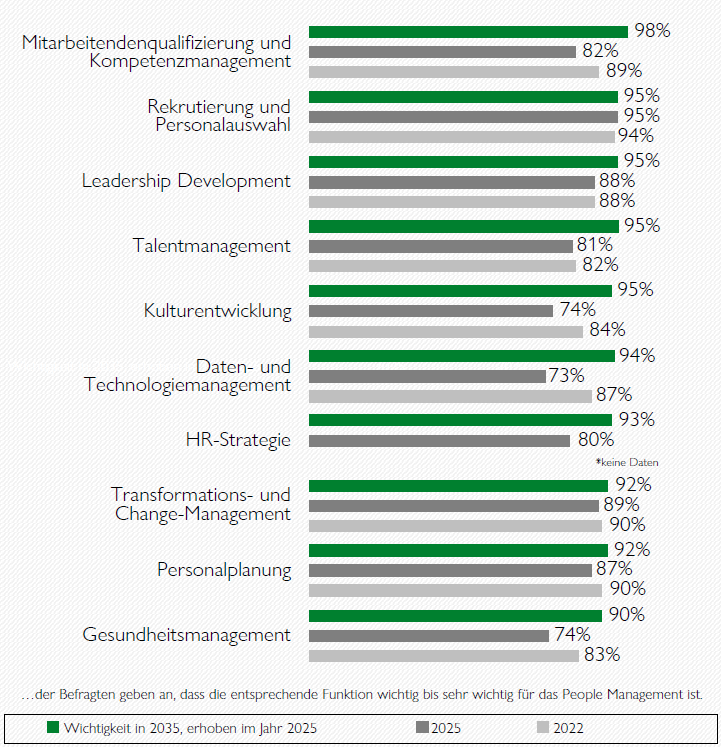
Looking ahead to 2035, the experts surveyed expect central HR functions to be significantly upgraded. In particular, the focus will shift to tasks aimed at employee qualification, development and long-term retention:
- Employee qualification and competence management
- Recruitment and personnel selection
- Leadership Development
- Talent Management
- Cultural development
- Data and technology management
In contrast, traditional functions such as performance appraisal or downsizing are becoming less important. Future people management will be more strategic - with a clear focus on sustainable human resources.
Large gaps in future topics
Despite the growing importance of the topics mentioned, the study shows a clear implementation gap. There are clear deficits, particularly in areas such as data and technology management, the integration of artificial intelligence and the design of positive work experiences (employee experience). The need for action is correspondingly high.
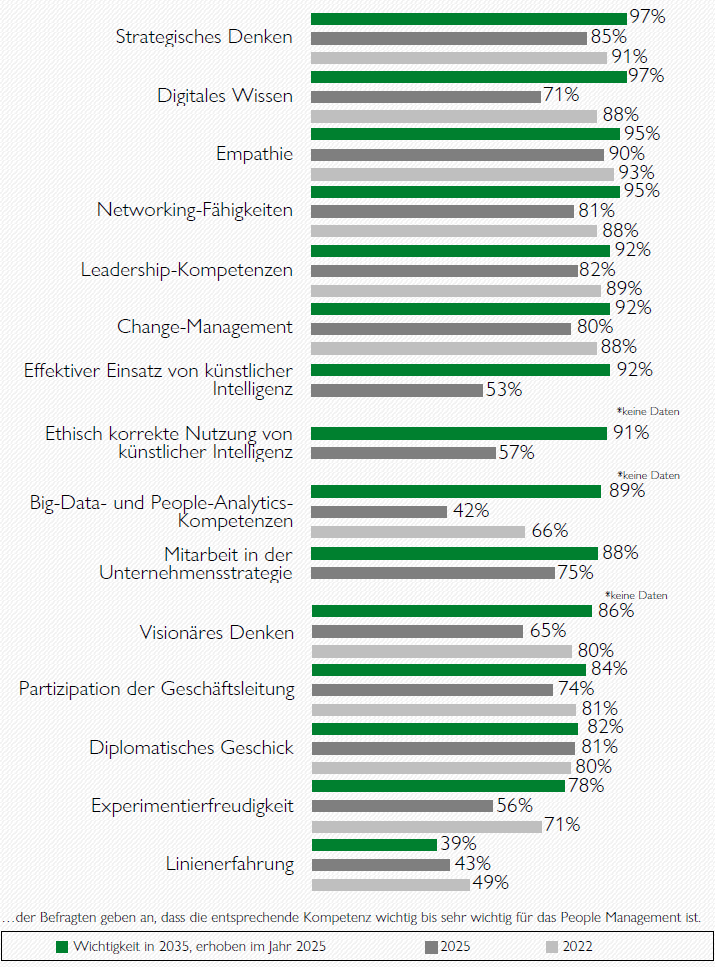
These gaps are also reflected at skills level. The requirements for HR professionals are becoming more diverse: in addition to technological understanding, strategic and social skills are also increasingly in demand. According to the study, these will be particularly important by 2035:
- Strategic thinking
- Digital knowledge
- Empathy
- Networking
- Dealing with AI and people analytics
Many of these skills are still underdeveloped today - which underlines the importance of targeted skills development.
New Work: Flexibilization picks up speed
At the same time, the organization of work is changing fundamentally. The pandemic has accelerated many new work elements - but not all of them have held up. Between 2022 and 2025, the use of mobile working and virtual teams temporarily declined again. For 2035, however, the experts surveyed expect a clear upswing, particularly in
Artificial intelligence in everyday working life
Individualized work
Digital communication and technologies
Traditional elements such as flexible working hours and working from home will also become the new normal in the long term. The aim is to align work more closely with the needs of employees.
Top performers focus on culture
The study also shows that companies that are considered particularly successful today differ in one key area - their corporate culture. Top performers exhibit significantly more pronounced cultural characteristics, for example:
- Visionary leadership
- Dynamics and the ability to change
- Culture of trust and personal responsibility
Less successful companies lag behind here - with negative consequences for change, innovation and employer attractiveness. Those who invest culturally create the basis for sustainable success.
Recommendations for action: Four strategic levers
In order to actively shape change and meet future requirements, the study identifies four key fields of action:
- Shaping the digital future
HR must become the driving force behind the digital transformation - through the targeted use of data analytics, the consistent digitalization of processes and the integration of artificial intelligence. - Targeted skills development
New skills are in demand: technological, strategic and ethical. Companies should invest specifically in developing these skills in order to future-proof their HR teams. - Strengthening the employee experience
A positive working experience is becoming a decisive competitive factor. It is important to create conditions that not only attract talent, but also retain it in the long term. - Anchoring New Culture
Cultural setbacks of recent years must be actively made up for. A modern, trusting and resilient corporate culture is the basis for sustainable change - and therefore for the success of New Work.
Result
People management is facing profound change. Only through strategic investments in skills, technologies and culture can HR departments make their contribution to future viability. The study not only provides orientation, but also clearly shows that now is the time to act.
Reading tip:
For further exciting insights into HR trends, it is worth taking a look at the previous study People Management 2030 - The Future of HR.